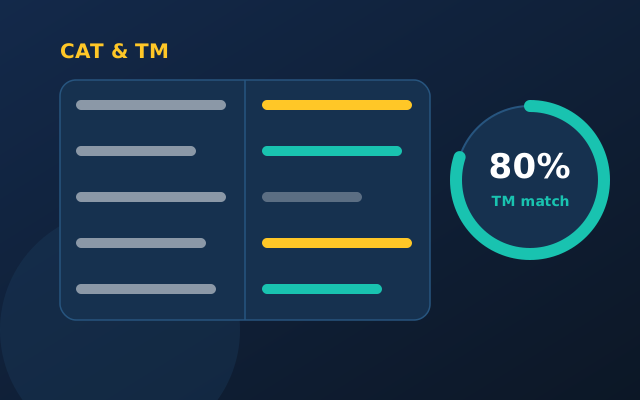
People hear "CAT tool" and picture machine translation. It's the opposite: a Computer-Assisted Translation tool is built around a human translator, and its job is to make that human faster and more consistent — not to replace them. The engine that makes it work is the translation memory.
Everything is broken into segments
A CAT tool splits your text into segments — usually sentences. The translator works one segment at a time, source on the left, translation on the right. This sounds mundane, but it's what makes everything else possible: every segment can be stored, searched and reused.
Translation memory: reuse that compounds
A translation memory (TM) is a database of every source segment you've translated and its approved translation. The next time the same — or a similar — sentence appears, the tool offers the stored translation automatically. Translate your product once, and the next version reuses everything that didn't change.
This is why localization gets cheaper per word the longer you work with the same provider: your TM grows, and more of each new job is already done.
Fuzzy matches: close, not exact
Matches aren't all-or-nothing. The TM scores how close a new segment is to something it's seen:
- 100% / exact — identical to a stored segment; reused, just re-checked in context.
- Fuzzy (75–99%) — close. The translator edits the difference instead of starting over.
- No match — new text, translated from scratch and added to the TM.
Pricing usually follows these tiers: you pay full rate for new words, less for fuzzies, and a small handling fee for exact matches. That's not a discount trick — it reflects the real work involved.
The translation memory is the asset. The CAT tool is just the place you spend it — and the place it keeps growing.
Why it also improves quality
Reuse isn't only about speed. Because past translations are surfaced automatically, the same phrase gets translated the same way every time. Combined with a glossary running alongside, the TM is what makes your fiftieth document sound like it came from the same hand as your first.
The short version
A CAT tool segments your text and pairs it with a memory of everything you've translated before. You translate each sentence once; the tool reuses it forever. Speed goes up, cost per word goes down, and consistency takes care of itself — as long as you keep the TM clean and let one provider build it over time.