Translating your product titles and checkout flow is table stakes. It gets a shopper to understand your store — but understanding isn't buying. In e-commerce, localization is a conversion lever, and the parts that move the needle most are often the parts that aren't "translation" at all.
Money has to feel local
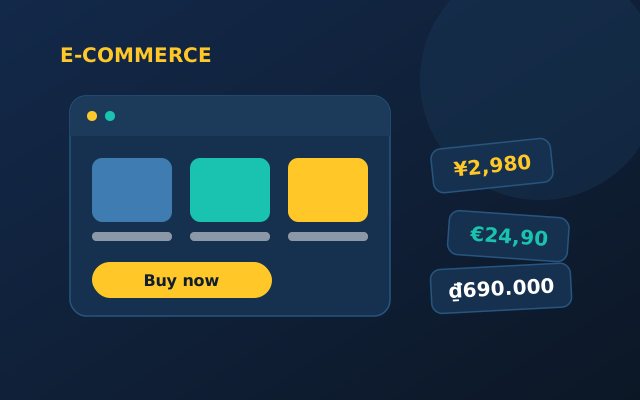
Show prices in the local currency, formatted the local way (a thousands separator is a comma in one market and a period in another). Display the all-in price shoppers expect to see — including or excluding tax according to local norms — because an unexpected number at checkout is a top reason carts get abandoned.
Payment methods are a deal-breaker
Card-first checkouts quietly lose entire markets. Much of Southeast Asia runs on e-wallets and bank transfers; other regions favor local schemes or cash-on-delivery. You can translate every word perfectly and still lose the sale if a shopper's preferred way to pay isn't on the page.
Trust signals are cultural
What makes a store feel safe varies: which badges, which guarantees, what return policy, how delivery times are phrased, whether reviews skew detailed or brief. Localize the reassurance, not just the product copy — international shoppers are more cautious with an unfamiliar brand, and trust is what closes the gap.
People don't abandon carts because they didn't understand the words. They abandon because something didn't feel made for them.
The details that catch you out
- Sizing & units. Clothing sizes, shoe sizes, metric vs imperial — convert, don't just translate.
- Addresses & names. Forms built for "First/Last name" and Western address order frustrate users elsewhere.
- Reviews & UGC. Localized products with only source-language reviews feel half-finished; plan how social proof gets translated or gathered locally.
- Imagery. Models, seasons and holidays that resonate at home can miss — or mislead — abroad.
Don't forget SEO
Shoppers search in their own language with their own phrasing — and a literal translation of your English keywords often isn't what they type. Localized product copy and metadata, built around the terms people actually search, is what gets you found in the first place. Localization that nobody can find converts nobody.
The short version
Translate the store, yes — then localize the money, the payment methods, the trust signals, the sizing and the search terms. That's the difference between a store that's readable in a new market and one that actually sells there.