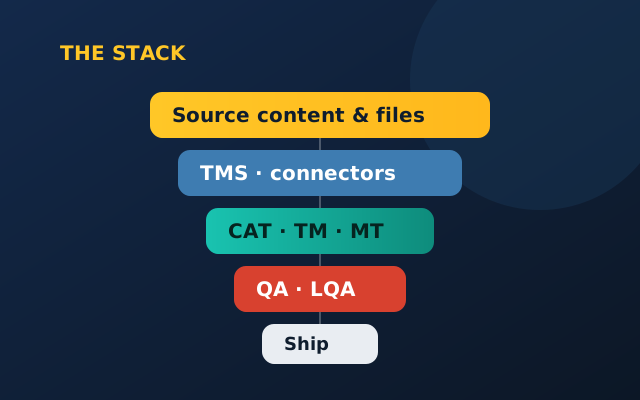
Walk into any localization conversation and you'll hear an alphabet soup — TMS, CAT, TM, MT, MTPE, QA, connectors. It sounds like a lot. In practice it's just five layers doing five jobs, and once you can name the job each layer does, the whole toolchain stops being intimidating.
1. Source & content layer
Everything starts with where your words live: code repositories, a CMS, design files, help-center articles, product catalogs. The first job of a modern stack isn't translating — it's getting content out and back in cleanly, in the right format, without copy-paste. This is where file formats and externalized strings matter.
2. The TMS — orchestration
A Translation Management System is the control tower. It receives content, splits it into jobs, assigns linguists, tracks status and deadlines, and pushes finished translations back. It doesn't do the translating; it manages the flow. If you run more than a couple of languages on any cadence, the TMS is what stops the spreadsheets-and-email chaos.
3. The CAT environment — translation
Computer-Assisted Translation tools are where a human actually works, segment by segment. The CAT layer is also where the two compounding assets live: translation memory (reuse of everything you've translated before) and glossaries (locked terminology). Many TMS platforms include a CAT editor; specialist desktop tools go deeper.
4. Machine translation & AI
MT proposes a draft; humans post-edit it where it makes sense (we wrote about when that pays off). In 2026 this layer increasingly includes LLM-based engines that can take glossaries and context as input — powerful, but still a draft engine, not a finish line.
5. Quality assurance
The last layer catches what slips through: automated checks for tags, numbers, terminology and length, then human linguistic QA in context. Skipping it is the single most common reason a "finished" localization embarrasses someone at launch.
Five layers, five jobs: get the content, orchestrate it, translate it, draft with machines, and check it. Everything else is a brand name.
How the pieces connect
The magic is in the seams. Connectors and integrations wire your repo, CMS or design tool directly to the TMS, so content moves without humans shuttling files. A good stack feels less like a pile of products and more like a pipeline: content flows in one side and ships, localized, out the other.
The short version
You don't need every tool on day one. You need to know which job is currently being done by a human with a spreadsheet — and replace that one first. Most teams start by externalizing strings and adding a TMS with a CAT editor, then layer in MT and automation as volume grows.