Video is the format everyone wants localized and the one most often done badly. Auto-generated, auto-translated captions are everywhere — and they're a quiet credibility leak. Doing video right means knowing which approach you actually need and respecting a few unforgiving rules.
First, get the terms straight
- Subtitles — translated dialogue for viewers who can hear; assume they get tone from the audio.
- Captions (SDH) — for deaf and hard-of-hearing viewers; include speaker IDs and key sound cues, usually in the same language.
- Voice-over — a translated narration laid over the original, common for documentaries, e-learning and corporate video.
- Dubbing — fully replacing the original voices, timed (and sometimes lip-synced) to performance.
They cost very different amounts and serve different goals. "Translate my video" usually means subtitles — but not always, and the wrong choice is expensive to redo.
Subtitling is constrained writing
You can't just translate the script and drop it in. Subtitles obey reading speed limits — there's a ceiling on characters per second a viewer can comfortably read — plus limits on line length and lines on screen. The translator condenses meaning to fit, which is a real skill: keep the sense, lose the words the eye doesn't have time for.
Timing (spotting) is half the job
Subtitles must appear and disappear with the speech, respect shot changes, and never linger into the next scene. This spotting work — building the time-codes — is as important as the translation. Good timing is invisible; bad timing makes even perfect text feel cheap.
Auto-captions are free for a reason. On anything you'd put your brand on, they read as exactly what they are.
Formats and delivery
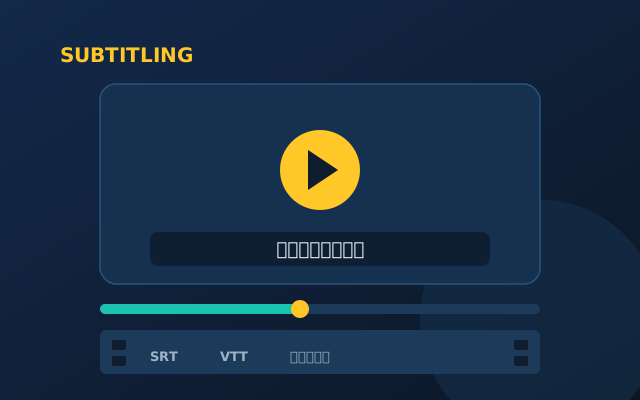
Common subtitle files are .srt and .vtt (web), with richer styling in formats like .ass. You'll either get a sidecar file to attach in your player or platform, or burned-in ("open") subtitles baked into the video. Decide which you need up front — it changes the workflow.
An Asia note
CJK subtitles have their own conventions for line length and breaking, and Thai's lack of spaces affects how lines wrap on screen. The reading-speed math is different too. Subtitling that's correct for English can read awkwardly in Japanese or Thai if those conventions are ignored.
The short version
Pick the right format (subtitles, captions, voice-over or dub), respect reading-speed and timing rules, and use proper subtitle files — not auto-translation. The result is video that informs or sells in another language instead of quietly signaling "we didn't really try here".